Best Stocks and Shares ISA Providers in the UK for 2026



Trading 212 is our best overall Stocks and Shares ISA for 2026. Interactive Brokers ranks second for global market access and advanced tools, and Lightyear takes third on the strength of a 0.1% FX fee, plain pricing and a flexible ISA. IG and XTB complete the top five with the two largest advertised ranges in this comparison.
The rest of the order depends on what you plan to hold. An investor who buys one UK-listed ETF each month has different needs from someone holding US shares, mutual funds or smaller international markets, and a provider that wins the first brief can lose the second. Our ranking weighs long-term costs, ISA practicality, investment choice, platform quality and provider track record. Affiliate relationships carry no weight in the scoring.
If you want a personalised shortlist rather than a general ranking, use our broker matching tool. To weigh providers outside the ISA wrapper, see our guide to the best UK stock brokers.
The best Stocks and Shares ISAs at a glance
How we ranked these ISA providers
Costs carry 30% of the weighting because they compound against a portfolio for as long as you hold it. ISA practicality carries 25% and covers flexibility, transfer support and how easily money moves in and out of the wrapper. Investment choice and platform quality contribute 15% each, provider track record and support 10%, and useful extras the final 5%.
Investment choice scores with diminishing returns on purpose. Once a provider covers mainstream UK, US and European shares and ETFs, it already serves most long-term portfolios, and a few thousand extra listings cannot buy back points lost to high FX charges, awkward transfers or a weak ISA.
We checked every fee and feature against each provider's own website on 20 July 2026, and the sources section lists the exact pages. We also read recent UK investor discussions to understand which questions matter to readers, without treating anonymous comments as evidence for any fee or feature.
 1. Trading 212: best Stocks and Shares ISA overall
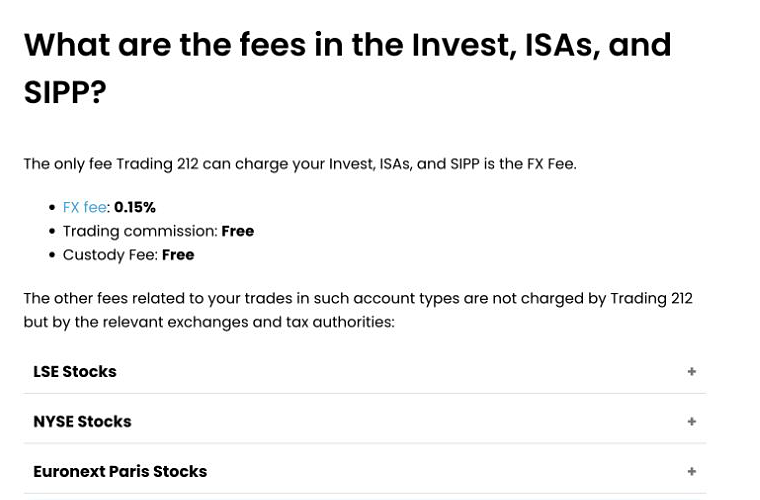
Trading 212 wins because it removes the charges most investors pay. Its Stocks ISA has no trading commission and no custody fee, and the 0.15% FX rate sits near the bottom of this comparison. Other fees may apply. See terms and fees.
The ISA mechanics hold up just as well. The account is flexible, so cash you withdraw can go back in during the same tax year without reducing your remaining allowance, and Trading 212 supports both cash and stock transfers. That second point lowers the risk of selling a portfolio just to change provider.
The gap is service depth. Trading 212 offers less research and less human support than a traditional platform, and an investor who wants phone access or in-house analysis will find Interactive Brokers, IG or AJ Bell a better fit. For a straightforward portfolio of listed shares and ETFs, we think the balance of cost, flexibility and usability here is the strongest on this page.
Read our full Trading 212 ISA review for the account detail, or our wider Trading 212 review for the platform as a whole.
Trading 212 suits investors who want to buy mainstream shares and ETFs regularly without an account or dealing charge. Its 0.15% FX fee is low, although Lightyear and Interactive Brokers charge less for currency conversion.
Open a Trading 212 Stocks ISA 2. Interactive Brokers: best for global access
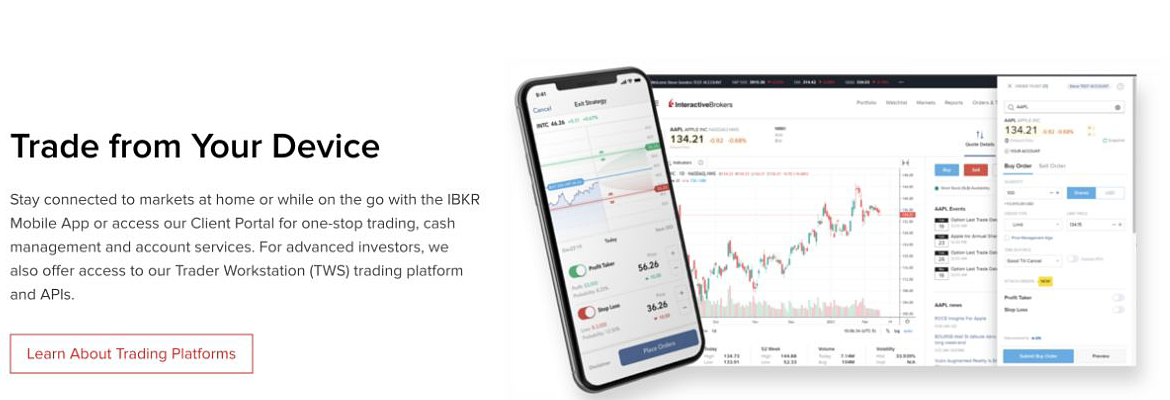
Interactive Brokers ranks second because it removes the ceiling an app-first ISA eventually hits. When a portfolio reaches beyond mainstream UK and US names, IBKR offers the broadest market access and the most advanced toolset in this ranking, and its costs stay low in use. Western European stock commissions start at £3 per trade, US stocks start at USD 0.005 per share, and its published FX example of 0.03% is the lowest conversion figure on this page.
The account terms support that case. IBKR charges no custody fee and nothing for incoming transfers, supports in-specie transfers when it supports the assets being moved, and includes two free withdrawals each month.
Three things stop it taking first place. The adult ISA carries a £3 minimum monthly activity fee, so a small, quiet account pays £36 a year for capability it may never use. The ISA operates as a cash-only account. And the platform takes more time to learn than the apps around it, which is the price of its depth.
Kai personally invests through Interactive Brokers, mainly for that market access. His experience informs our view of the platform, but it carries no weight in the ranking and it does not soften the drawbacks above.
Our full Interactive Brokers ISA review covers the account, our broader Interactive Brokers review covers the platform, and our Trading 212 vs Interactive Brokers comparison sets the top two side by side.
 3. Lightyear: low FX costs and simplicity
Lightyear earns third place on cost discipline. Its Stocks and Shares ISA is commission-free, with no account or custody fee and a 0.1% FX fee. Fund manager fees may apply to ETFs, and other charges can apply. That FX rate undercuts Trading 212, IG, XTB and Freetrade's Basic plan. For an investor who converts pounds into dollars or euros every month, the difference adds up year after year.
The ISA mechanics support the pricing. The account is flexible, transfers in can arrive as cash or in-specie, and a full transfer out can leave the same way. Partial transfers out move as cash only. One detail to plan around: ISA cash sits in pounds, so every purchase of a US or European security involves a conversion at that 0.1% rate.
Lightyear stays third because it has a shorter operating history and a narrower ecosystem than Interactive Brokers. We still rank it ahead of IG and XTB because low ongoing costs and clean ISA mechanics matter more to a typical long-term investor than a longer list of specialist securities.
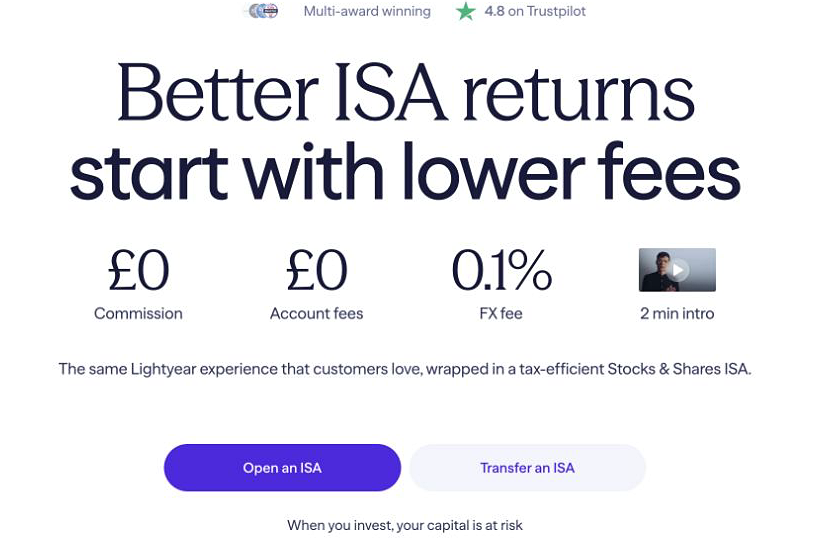
Our full Lightyear review covers the platform in more detail.
 4. IG: best for choice and established service
IG pairs the largest advertised range in this comparison, more than 12,000 shares and ETFs, with a self-directed ISA that has no account fee, no trading commission and no custody fee. The ISA is flexible, and IG charges nothing on its side for transfers in or out.
The 0.7% FX fee is the catch. Converting £10,000 costs £70 at IG against £15 at Trading 212 and £10 at Lightyear, and a later sale can mean paying for conversion again. That single number keeps IG out of our top three.
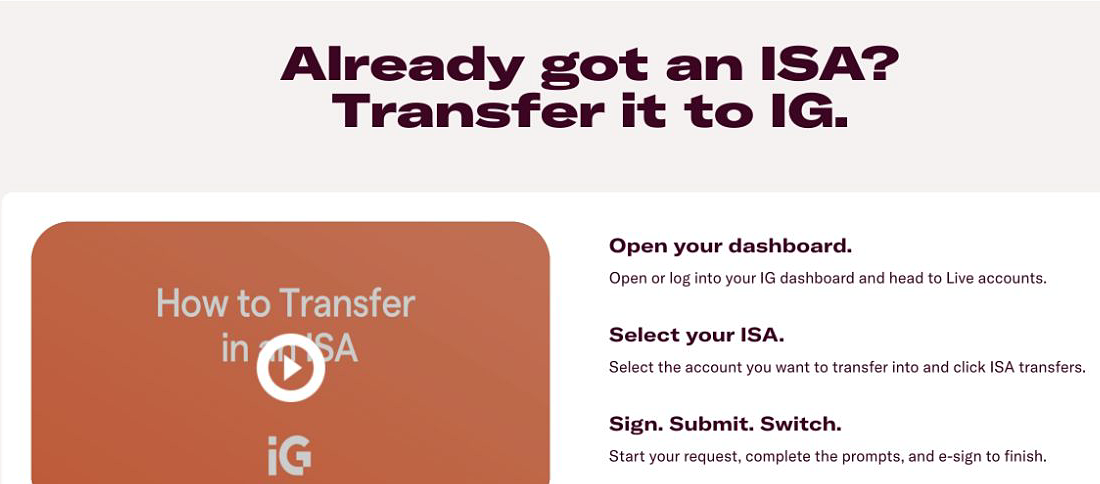
IG makes sense for an investor who values coverage and an established provider over the lowest overseas conversion cost. It also costs little to run for a portfolio that stays in UK-listed investments priced in pounds, where the FX fee never applies.
 5. XTB: broad choice with a competitive ISA
XTB puts more than 9,000 stocks and ETFs inside a flexible ISA with 0% commission up to the equivalent of EUR 100,000 in monthly turnover. Above that level, which sits far beyond a normal month of ISA activity, the rate is 0.2% with a £10 minimum. Account opening and maintenance are free for active clients, and XTB charges no ISA inactivity fee.
The practical features fit long-term investing. Transfers run through the app, fractional investing starts at £1, and the research and market tools go further than the simplest apps in this list.
XTB stays fifth because its UK ISA is newer than the accounts above it and its 0.5% FX fee gives Lightyear, Trading 212 and Interactive Brokers a clear cost advantage for regular overseas buying.
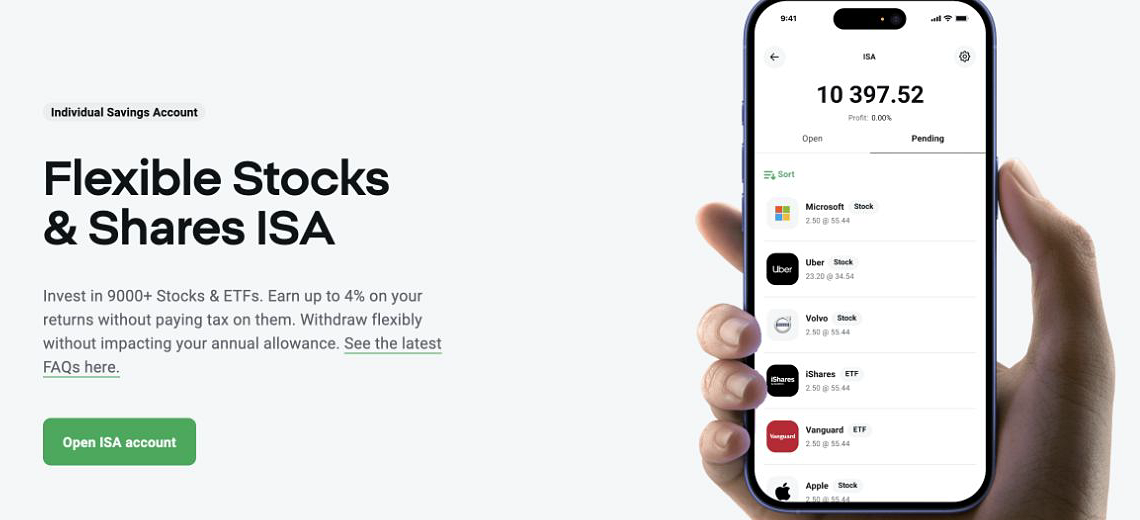
See our complete XTB review for the full picture.
 6. Freetrade: a simple free flexible ISA
Freetrade includes its Stocks and Shares ISA in the free Basic plan, charges no dealing commission and advertises more than 8,200 investments. The ISA is flexible, and transfers in cost nothing, although Freetrade estimates four to six weeks for the process.
The cost story splits along currency lines. Stay in UK-listed investments priced in pounds and the free plan lives up to its name. Buy US shares on Basic and the 0.99% FX fee becomes the most expensive conversion rate in this comparison. Standard cuts it to 0.59% and Plus to 0.39%, but both add a subscription, so a regular overseas investor should total the plan cost and the FX saving before upgrading.
We rate Freetrade as a solid home for simple UK investing. An investor who expects to hold much outside the UK will find the numbers work against it next to Trading 212 or Lightyear.
 7. InvestEngine: best for ETF-only investors
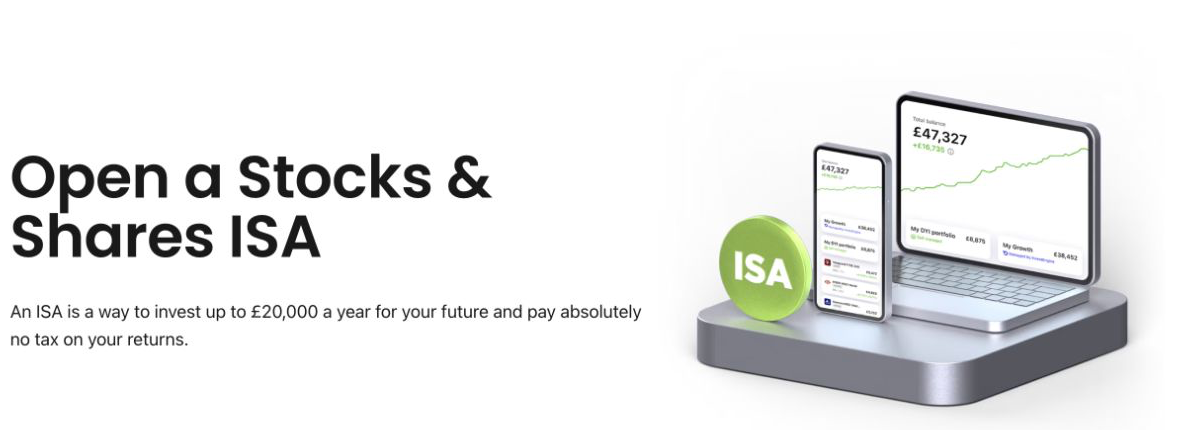
InvestEngine narrows the DIY ISA to ETFs and strips out its own charges in the process. There is no platform, setup, withdrawal or dealing fee, leaving only the ETFs' own costs, which you would pay wherever you held the same funds. The ISA is flexible.
That focus suits an investor building a diversified ETF portfolio who has no interest in anything else. It rules out individual shares, so anyone who wants to hold companies directly needs a different provider. InvestEngine also states that its Managed and LifePlan portfolios are currently unavailable while it makes updates, which leaves DIY as the only route open for now.
See our full InvestEngine review for a closer look at the ETF-only platform.
 8. AJ Bell: traditional service and broad fund choice
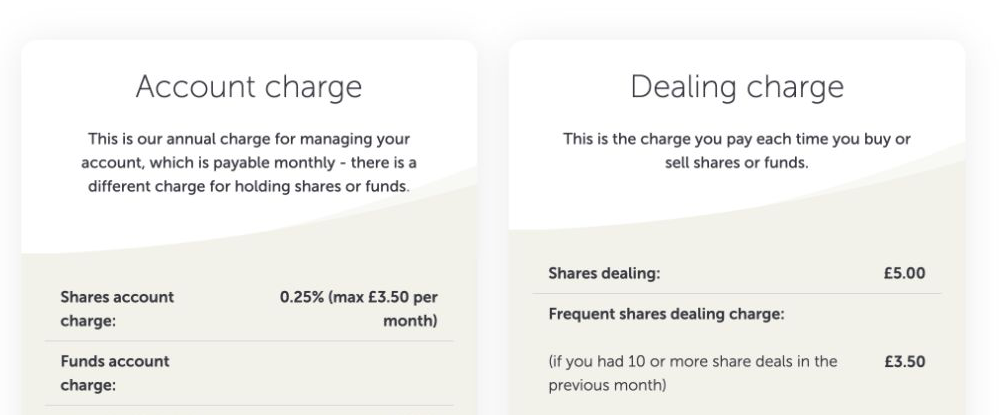
AJ Bell is the traditional platform on this list, and its pricing reads that way. Shares carry a 0.25% annual charge capped at £3.50 per month. Funds cost 0.25% on the first £250,000 and 0.1% on the next £250,000, with no charge above £500,000. Online dealing costs £5 for shares and £1.50 for funds, and FX runs on a tiered scale capped at 0.75%.
Regular investing changes the picture. AJ Bell drops the dealing charge for scheduled investments, which suits an investor who contributes the same amount every month, and the fund tiers reward larger balances as the percentage falls with size.
AJ Bell costs more for the way most small investors use an ISA. The account charge, dealing fees on ad hoc trades and a non-flexible ISA all count against it, and the free providers above cost less for a small, straightforward ETF portfolio. AJ Bell earns its place with investors who will use its traditional service, funds and regular investing.
 9. eToro ISA powered by Moneyfarm: DIY and managed options
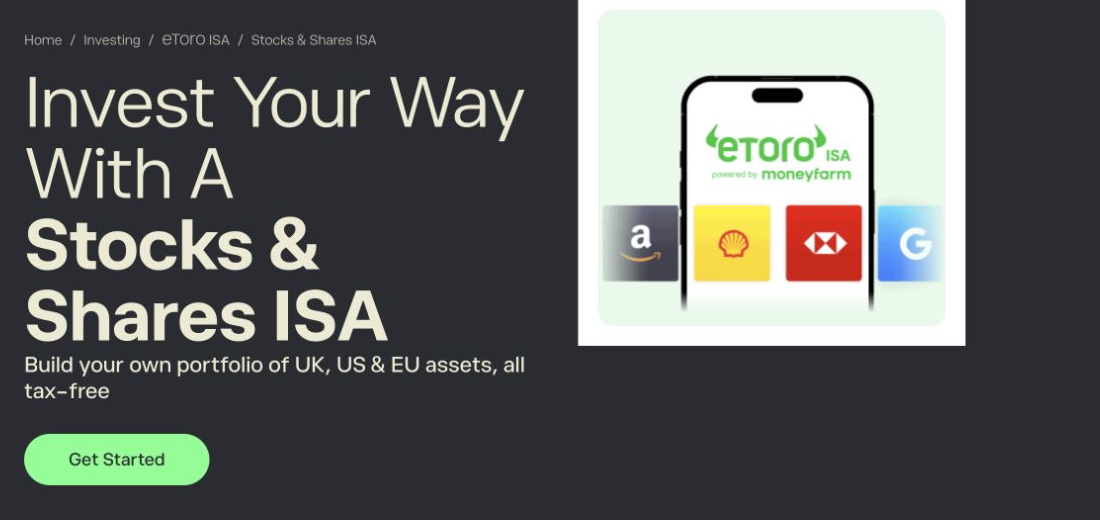
The eToro ISA, powered by Moneyfarm, combines DIY and managed portfolios in one flexible ecosystem. DIY investors choose from more than 1,000 stocks, ETFs, bonds and mutual funds, and the managed route sits alongside for investors who prefer not to run their own portfolio.
Three limits keep it ninth. The DIY range, at more than 1,000 instruments, still trails the multi-thousand line-ups at IG, XTB and Freetrade. An ISA custody fee may apply, capped at £45 per year. And transfers move as cash, which means selling existing investments rather than moving them in-specie.
The combination may suit someone who wants self-directed and managed money under one roof. Anyone chasing the widest DIY range or the lowest recurring cost has stronger options higher up this page.
Read our eToro ISA review for the account specifics and our broader eToro review for the platform.
How much do FX fees matter?
FX fees bite when your ISA holds pounds and you buy an investment traded in another currency. On £10,000 of conversion, a 0.1% fee costs £10 and a 0.99% fee costs £99, and a later sale can trigger a second conversion on the way back.
Illustration based only on the providers' published percentage FX fees. It excludes spreads, dealing commissions, taxes and market charges. A later sale may require another conversion.
FX drops out of the equation when you buy a UK-listed ETF in pounds. In that case, weigh account fees, dealing charges, fund costs and transfer support instead, and check that the provider lists the exact ETF you want.
Which ISA provider fits which investor?
How to choose a Stocks and Shares ISA
Start with the investments you need
Confirm the platform lists the shares, ETFs, funds or investment trusts you plan to hold. A large headline number means nothing if your chosen fund is missing. ETF-only investors can look at InvestEngine, while anyone who wants mutual funds or specialist markets needs a broader provider.
Calculate your own annual cost
Add up the account fee, dealing costs and FX charges for the activity you expect. A free account with expensive FX can cost more than a paid account for a frequent overseas investor, and fund charges and market taxes sit on top of whatever the provider bills.
Check transfer support before opening
An in-specie transfer moves supported investments without selling them. A cash transfer sells the investments first and leaves you out of the market while the money moves. Fractional shares may need selling as well, because fractions are often not transferable. Our guide to fractional shares explains how they work.
Decide whether flexibility matters
The overall ISA allowance is £20,000 for the 2026 to 2027 tax year. A flexible ISA lets you withdraw cash and replace it during the same tax year without reducing your remaining allowance. In a non-flexible ISA, the replacement counts as a new subscription.
Consider the service you will use
Some investors never need more than app-based support. Others want phone access, deeper research or a provider that can also hold a Junior ISA, SIPP or managed portfolio. Paying more is reasonable when you will use those services.
ISA transfer checklist
- Confirm that the new provider accepts your ISA type and existing investments.
- Check whether the transfer will be in-specie or in cash.
- Ask how fractional shares and unsupported assets will be handled.
- Start the transfer through the new provider. Do not withdraw the money yourself.
- Keep enough cash available for any final account or dealing charges.
Frequently asked questions
What is the best Stocks and Shares ISA in the UK?
Trading 212 is our best overall pick for most self-directed investors because it pairs a flexible ISA, a 0.15% FX fee and cash and stock transfer support with no trading commission or custody fee. Other fees may apply. See terms and fees. Interactive Brokers suits advanced investors who want global market access, while Lightyear's 0.1% FX fee undercuts Trading 212, IG, XTB and Freetrade for regular currency conversion.
Is Lightyear better than Trading 212 for an ISA?
Lightyear charges 0.1% for FX against 0.15% at Trading 212, and both run flexible ISAs without account or dealing fees. Fund manager fees and other charges may apply. Trading 212 ranks higher for its broader overall ecosystem and recurring-investment tools. Lightyear can be the better fit for someone who values a simpler product and converts currency often.
Is the £3 Interactive Brokers ISA fee charged every month?
Interactive Brokers describes the charge as a £3 minimum monthly activity fee on its adult Stocks and Shares ISA. That makes IBKR a poor match for a very small, inactive account, while its 0.03% published FX example and international market access can justify the cost for investors who use those strengths.
Can I have more than one Stocks and Shares ISA?
Yes. UK residents can hold and pay into more than one ISA, as long as their combined subscriptions stay within the overall annual allowance, which is £20,000 for the 2026 to 2027 tax year.
Should I choose a flexible Stocks and Shares ISA?
Choose one if you may withdraw cash and replace it in the same tax year, because a flexible ISA restores your allowance while a non-flexible ISA treats the replacement as a new subscription. It matters less if you plan to leave the portfolio untouched and stay well below the annual limit.
Can I transfer an ISA without selling my investments?
Yes, when both providers support in-specie transfers and accept the investments you hold. Some providers move transfers as cash only, and unsupported or fractional holdings may need selling even within an otherwise in-specie transfer.
Is InvestEngine suitable for individual shares?
No. InvestEngine focuses on ETFs, which suits an investor building an ETF portfolio and rules the platform out for anyone who wants to buy individual company shares.
Our final verdict
Trading 212 offers the strongest overall Stocks and Shares ISA for most UK investors in 2026. It keeps provider fees low, runs a flexible ISA, supports cash and stock transfers and carries one of the lowest FX rates on this page at 0.15%.
Interactive Brokers takes second for investors who will use its global markets and advanced platform, and Lightyear takes third with its 0.1% FX fee, plain pricing and flexible transfer options. IG and XTB remain strong alternatives for investors who want the widest advertised ranges in this ranking.
Before you open anything, list the exact investments you plan to hold and price a year of your own activity. A general ranking finds the strongest all-rounder, and your own portfolio decides whether that pick is right for you.
Sources and methodology
We checked the 2026 to 2027 ISA allowance against GOV.UK. Provider fees and features were checked on 20 July 2026 using the official pages for Trading 212, Interactive Brokers, Lightyear, IG, XTB, Freetrade, InvestEngine, AJ Bell and eToro.
Our ranking reflects the methodology explained above. It does not measure investment performance, and it does not guarantee that the highest-ranked provider will suit every portfolio.
Kai is an investor who helps people choose the right broker and invest with confidence. He founded MatchMyBroker, a broker-comparison site for a global audience, and EU Investing Hub, his European-focused investing site. He also runs the Smart Money with Kai YouTube channel, where he breaks down investing, brokers and personal finance.
When investing, your capital is at risk and you may get back less than invested. Past performance doesn't guarantee future results.
Advertisement, subject to compensation from the companies mentioned in this content.
Capital at risk. ISA rules apply. The value of investments can go down as well as up. Lightyear U.K. Ltd is authorised and regulated by the Financial Conduct Authority (FRN 987226). Lightyear does not provide tax advice.
eToro is a multi-asset investment platform. The value of your investments may go up or down. Your capital is at risk.This content contains affiliate links. We may earn a commission if you sign up through them, at no extra cost to you.
.png)